The comparison between manual standing heat observation and activity collar systems comes up constantly in conversations with dairy producers looking to lift their heat detection rate. It's a genuine question, and it deserves a direct answer based on published data rather than product marketing claims. Both methods have real detection rates, real failure modes, and specific conditions under which one outperforms the other.
This article covers what the comparison data shows, where manual observation fails, where collar-only systems also fall short, and why cycle context changes the picture in ways that neither method alone addresses.
What Manual Standing Heat Detection Actually Achieves
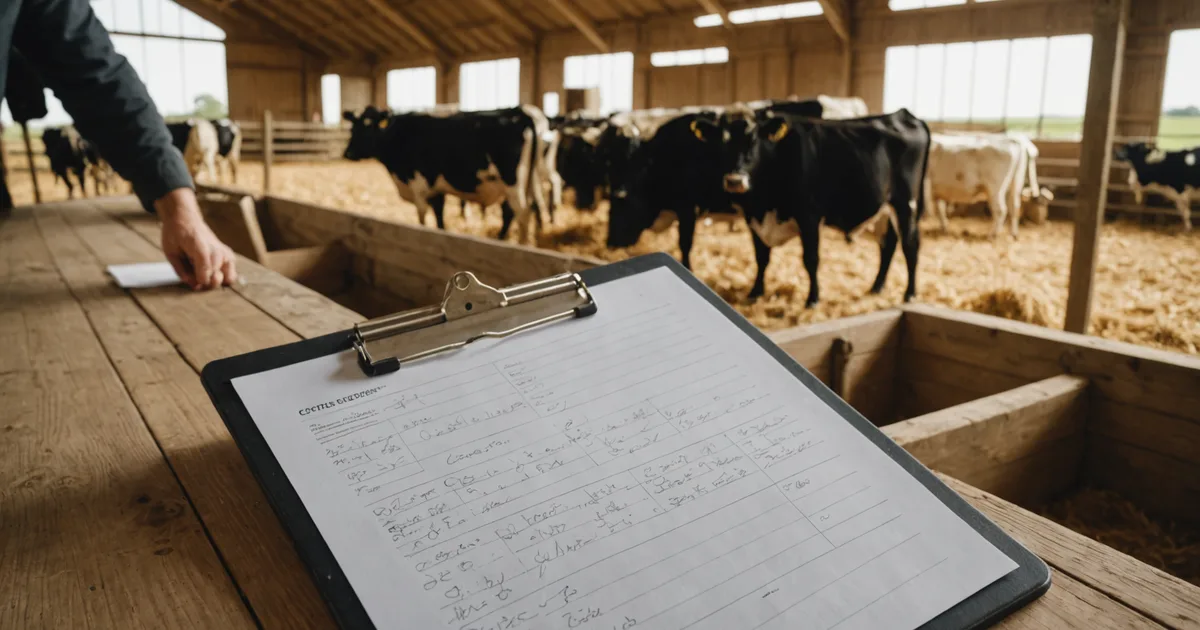
Standing heat observation, the standard method on Australian pasture-based dairy farms, depends on direct observation during a defined window of the day. The published detection rate for twice-daily observation sessions of 20 to 30 minutes each sits consistently in the range of 55% to 70% across multiple Australian and New Zealand studies. Single observation session farms typically achieve 45% to 60%.
The detection gap in manual observation has two main sources. The first is temporal: a cow in standing oestrus for a 6 to 10 hour window during a period when no observation is scheduled will not be detected. Bovine oestrus onset has a well-documented nocturnal and early-morning clustering effect, with a significant proportion of cows coming into standing oestrus between midnight and 6am. A farm with observation sessions at 6am and 5pm will have a full 12-hour gap in the early part of this high-activity window.
The second source is observational capacity. A single observer watching 80 to 150 cows in a 25-minute period cannot give full attention to every animal. Cows that are in oestrus but not displaying prominent mounting behaviour, either because they have quiet oestrus expression, or because the herd is too large for each cow to have a ready mounting partner visible to the observer, are easily missed. Larger herds have systematically lower manual detection rates per cow than smaller herds for this reason.
Where Activity Collars Improve on Manual Detection
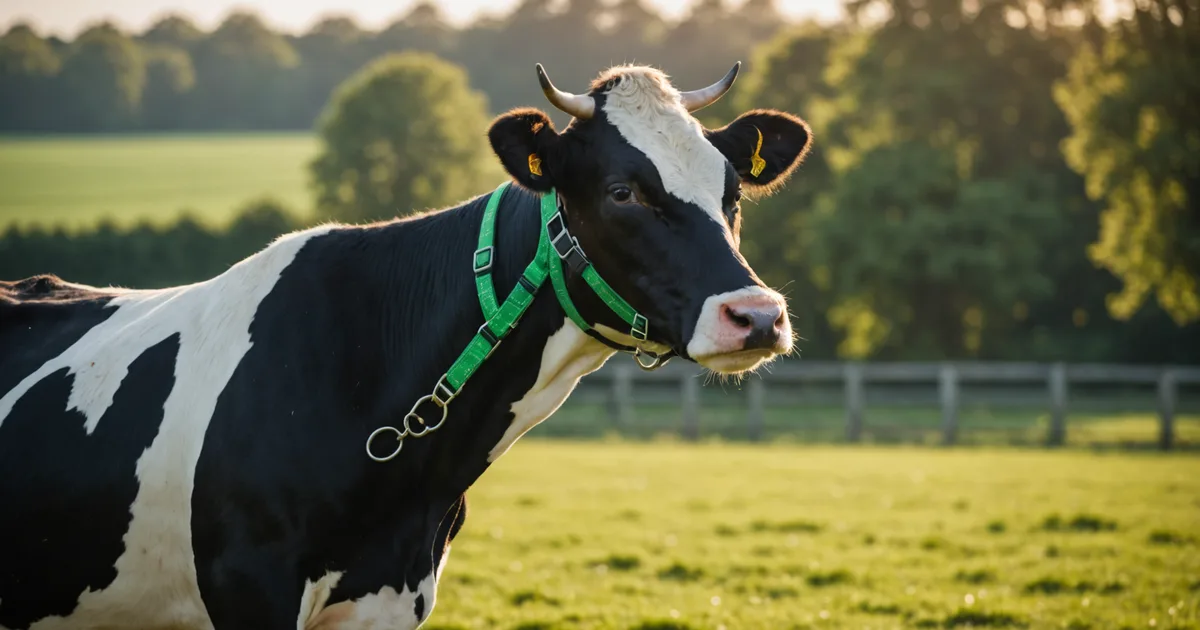
3-axis accelerometer activity collars address the temporal gap directly. Because the collar monitors movement continuously, a cow that peaks in activity at 3am is captured the same way as one that peaks at 8am. Published validation studies on activity-based detection systems report detection rates in the range of 70% to 90% under optimal conditions, with most commercial systems in broad use achieving somewhere in the 75% to 85% range across diverse herd types.
The improvement over twice-daily manual observation is real and consistent. Activity collar systems tend to show their largest gains in three specific scenarios. Large herds, where the manual observer-to-cow ratio works against detection, benefit most significantly. Summer periods, when oestrus expression is compressed and nocturnal activity peaks become more pronounced as cows avoid the daytime heat, show collar-over-manual improvement most clearly. And farms that have reduced observation frequency for labour reasons, running once-daily sessions, see the largest absolute lift from adding continuous monitoring.
Where Activity Collar Systems Fall Short
The detection rate figures for collar systems are real, but they're not the full picture. Activity collars measure movement, not oestrus. This distinction matters practically.
False positives are an inherent feature of threshold-based activity detection. Cows that are yarded for routine procedures, moved between paddocks, or disturbed by herd-mates generate elevated activity signals that can be misclassified as oestrus by a system relying on raw movement data. On farms with active yarding programs during the breeding season, false positive rates can be high enough that farm staff begin to discount alerts, which defeats the purpose of having an alert system at all.
False negatives remain a meaningful problem in specific cow sub-populations. Cows with quiet oestrus, where heat expression is genuinely suppressed, produce low activity elevation even during genuine oestrus events. These cows are missed by manual observation and by collar systems for the same underlying reason: the behavioural signal is weak. Collars don't create oestrous expression where there is none. They observe activity, and if activity doesn't rise significantly during oestrus, the system has nothing to flag.
Heat stress has a parallel effect. In temperatures above 28 to 30 degrees Celsius, oestrus expression in dairy cattle shortens and weakens. Activity elevation during oestrus is lower and briefer, making threshold-based detection harder. A collar system optimised for temperate conditions may perform substantially below its published validation rate during a February heatwave in northern Victoria or the NSW Riverina.
The Cycle Context Layer
Both manual observation and raw activity collar detection share a structural weakness: they make each heat detection decision as a standalone event, without reference to when the cow is expected to cycle based on her own history. This is where cycle context adds a material improvement.
Consider a collar system that sees a moderate activity elevation on day 19 from a cow's last detected heat event. The cow's average natural cycle is 21 days. Without cycle context, the system has to decide whether that day 19 activity is oestrus or noise, using only the current activity data. It's a borderline call.
With cycle context, the system knows this cow hasn't reached her expected cycle window yet. Day 19 activity is outside her normal pattern. That information shifts the probability: the day 19 elevation is more likely noise, and the detection should wait for the expected window around day 21. Two days later, the cow's activity peaks again. Now the system has context, the elevation is expected, and it's within the predicted window. Detection confidence is higher with the same underlying activity data, because the timing information has been factored in.
The reverse scenario matters equally. A cow with a consistent 19-day cycle whose activity elevation on day 19 is moderate, not dramatic, may be dismissed by a threshold-only system as noise. Cycle context tells the system this cow is exactly at her expected window. The same moderate elevation is now more likely to be genuine oestrus. Detection is more sensitive for this cow in this cycle, without increasing the false positive rate for other cows.
What This Means for Detection Architecture
Manual observation as the sole detection method has a ceiling of around 65% to 70% under good management conditions, with the ceiling dropping under adverse conditions. The constraint is irreducibly the observation gap and the observer-to-cow ratio problem.
Activity collar systems push that ceiling to 75% to 85% under typical farm conditions, by eliminating the observation gap and removing the observer-ratio problem. The constraint shifts from availability of observation to signal quality and threshold calibration.
Adding cycle context to activity collar data addresses the signal quality problem, particularly for the sub-populations where threshold-only detection is least reliable: cows with natural cycles at the tail of the population distribution, and cows in specific physiological states where activity elevation is moderate rather than pronounced. The improvement is not a step-change in the headline detection rate. It's a narrowing of the detection gap across the harder-to-detect fraction of the herd.
We want to be clear about what this comparison doesn't say. Activity collars plus cycle context doesn't eliminate false positives entirely, and it doesn't detect oestrus in cows with genuine clinical anoestrus or severely suppressed heat expression. The comparison describes performance improvement in the normal population of cycling cows. Cows that aren't cycling, due to anovulatory conditions, pathological luteal cysts, or persistent corpus luteum, require veterinary investigation independent of the detection method.
The Practical Decision
For farms deciding between methods, the data supports a clear direction. Twice-daily manual observation is an appropriate foundation for smaller herds where the observer-to-cow ratio is manageable, and where the farm's joining period is compact and labour is available. For herds above 150 cows, or where labour limits observation frequency to once daily, or where summer heat stress is a consistent seasonal factor, collar-based continuous monitoring produces measurably higher detection rates across published validation data.
Within the collar-based approach, the cycle history layer improves on threshold-only detection specifically for farms that care about reducing the false negative rate in individual cows, not just lifting the population-level detection rate. That distinction matters most when individual cows have a history of missed heats that can't be explained by low activity.