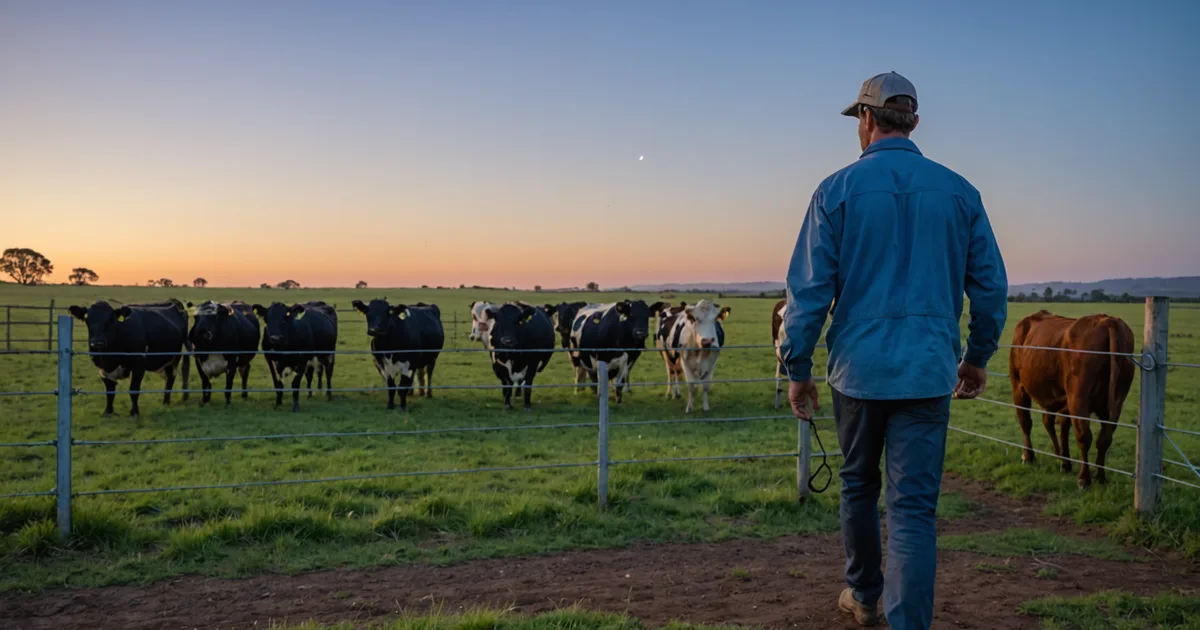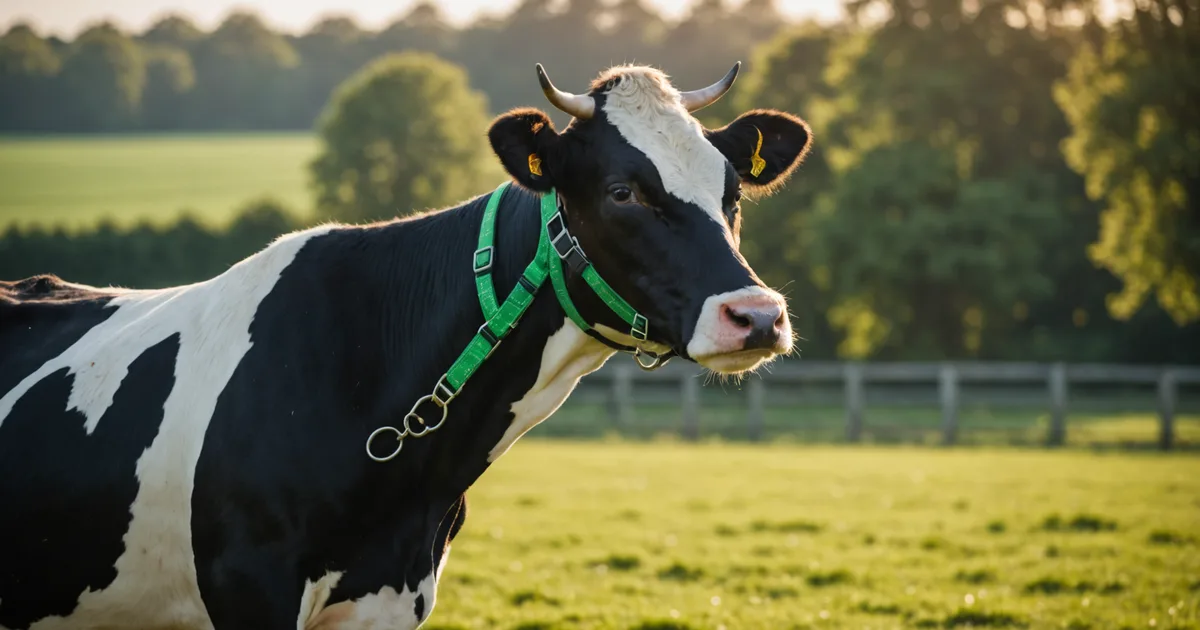

Every conversation about heat detection, A.I. timing, and calving interval ultimately comes back to a single biological fact: the bovine fertile window is approximately 12 hours long. Not 24 hours. Not a two-day window where service on any morning of the detected cycle will do. Twelve hours, broadly centred on ovulation, outside of which conception probability drops sharply.
This is why we built Ovum around breeding window prediction rather than just heat detection. Knowing a cow is in oestrus tells you a heat event is occurring. Knowing the predicted fertile window tells you when to act on it.
The Biology Behind the 12-Hour Window
Bovine ovulation occurs at the end of the oestrus period, roughly 24 to 32 hours after the onset of standing oestrus. The secondary oocyte released at ovulation has a viable lifespan of approximately 6 to 12 hours once released. Spermatozoa deposited in the reproductive tract survive for up to 24 to 30 hours under normal conditions, but fertilising capacity, the proportion of sperm capable of successful zona binding, declines over that window. Fertilisation requires viable sperm to meet a viable oocyte within a narrowing timeframe.
The practical implication, which is well established in bovine reproduction literature, is that insemination 0 to 24 hours after the onset of standing oestrus achieves the highest conception rates, with peak conception occurring when service is performed roughly 12 hours before ovulation. Insemination too early, before the oocyte is released, depends on sperm surviving in the reproductive tract until ovulation. Insemination too late, after oocyte viability has declined, finds no receptive gamete.
The AM-PM rule in A.I. service protocols, which instructs technicians to serve cows observed in oestrus in the morning on the afternoon of the same day, or cows observed in oestrus in the afternoon on the following morning, was developed precisely because of this window. It's an approximation designed to target a 6 to 18 hour insemination-to-ovulation interval across different oestrus detection times. It works reasonably well as a rule of thumb for obvious, clearly-observed standing heats. Its limitation is that it assumes oestrus onset has been correctly identified and that the observation time accurately reflects the start of standing, rather than a point mid-way through a heat event that began several hours earlier.
Where Timing Goes Wrong
The most common timing error on Australian dairy farms is service that's technically within the cycle but late relative to ovulation. A cow whose standing oestrus began at midnight, was first observed at the 6am check, and whose heat was called at that point, has already been in oestrus for 6 hours before being detected. Applying the AM-PM rule from the 6am observation means service at the afternoon session, roughly 8 to 10 hours after detection. That's 14 to 16 hours after oestrus onset. Ovulation in that cow may have already occurred or be imminent by service time, and declining oocyte viability compresses the conception window.
On a farm with twice-daily observation and a population of cows where a meaningful proportion have overnight oestrus onset, a systematic late-detection bias produces a systematic service-timing error. The effect is not dramatic on any individual cow, but it accumulates across the herd over a full breeding season. The result is conception rates that are lower than they would be with the same semen and the same cows but better timing.
This is one of the reasons farms with activity collar systems often see modest rather than dramatic conception rate improvements when they add collars without changing their service protocol. The collar improves detection rate, catching more heats. But if the service timing protocol still applies the AM-PM rule from detection time rather than from estimated oestrus onset, the timing improvement is limited.
How Ovum Uses Collar Data to Predict the Window
Activity collar data gives us the ability to estimate oestrus onset more precisely than observation time alone. The pattern of accelerometer data during oestrus shows a characteristic build-up: activity starts rising several hours before full standing oestrus, peaks during the standing period, and then subsides. By analysing the shape of the activity elevation alongside each cow's cycle history, we can estimate not just that oestrus is occurring but how far through the oestrous event the cow currently is.
That estimate drives a predicted fertile window, expressed as a time range rather than a single service instruction. The window tells the farm: based on this cow's activity pattern and her cycle history, the optimal service time is between X and Y hours from now. The prediction narrows the uncertainty from the AM-PM rule's several-hour ambiguity to a smaller, more precise range.
We are not claiming this prediction is precise to the minute. Bovine ovulation timing has natural biological variability. A cow's cycle history reduces but doesn't eliminate that variability. What the window prediction does is move from a time-of-observation anchor, which can be many hours after oestrus onset, to an estimated oestrus-onset anchor, which is closer to the biological event driving the service timing calculation.
The Profitability Connection
The link between breeding window timing and herd profitability runs through conception rate and calving interval. A 5 percentage point improvement in first-service conception rate, from 53% to 58%, on a 200-cow seasonal herd, means roughly 10 additional conceptions per joining period. Each additional conception that occurs within the target in-calf window is a cow that calves on time, whose milk production window aligns with the seasonal pattern, and who doesn't require an extra A.I. service or extended calving interval management.
The value of each additional in-calf conception depends on milk price and cow production level, but for typical pasture-based Victorian or Gippsland operations, the industry guidance on calving interval economics places the value in the range of $150 to $250 per cow per additional in-calf conception within the target window. At 10 additional conceptions, that's $1,500 to $2,500 per season for a 200-cow herd, before counting the saved A.I. service costs on cows who would otherwise have required repeat services.
These are not hypothetical numbers. They're the arithmetic of what the 12-hour window means when you close more of it.
The Limits of Window Prediction Alone
Window prediction, like any detection improvement, operates on cows that are cycling normally and expressing oestrus with a detectable activity pattern. For cows that are genuinely anovulatory, for cows with luteal cysts that suppress ovulation, or for cows in early post-partum anoestrus, better window prediction doesn't help because there's no window to predict. The biological prerequisite for timing precision is that the cow is ovulating in the first place.
For herds where first-service conception rate is below 45%, the most impactful interventions are often nutritional and veterinary rather than detection-related. Window prediction is a tool for extracting more value from cows that are cycling normally. It doesn't substitute for managing body condition, reproductive health, or voluntary waiting period appropriately.
This is worth saying plainly because the case for any detection technology can be oversold. Our view is that Ovum delivers the most value to herds where the cows are cycling normally and the main variable is detection accuracy and service timing. For herds with underlying fertility problems, fixing the detection system first gets the priority order wrong.
Putting It Together
The 12-hour breeding window is fixed biology. No management system changes the fertile period length or the ovulation timing distribution. What technology can change is how precisely you identify where each cow sits within that window at any given point, and how accurately you can schedule service to meet it.
That's the problem Ovum was built to solve. Not as a replacement for the agricultural and veterinary foundations of good dairy herd management, but as a precision layer on top of them, closing the gap between a heat event occurring and a conception resulting from it.